Thursday, June 29, 2023

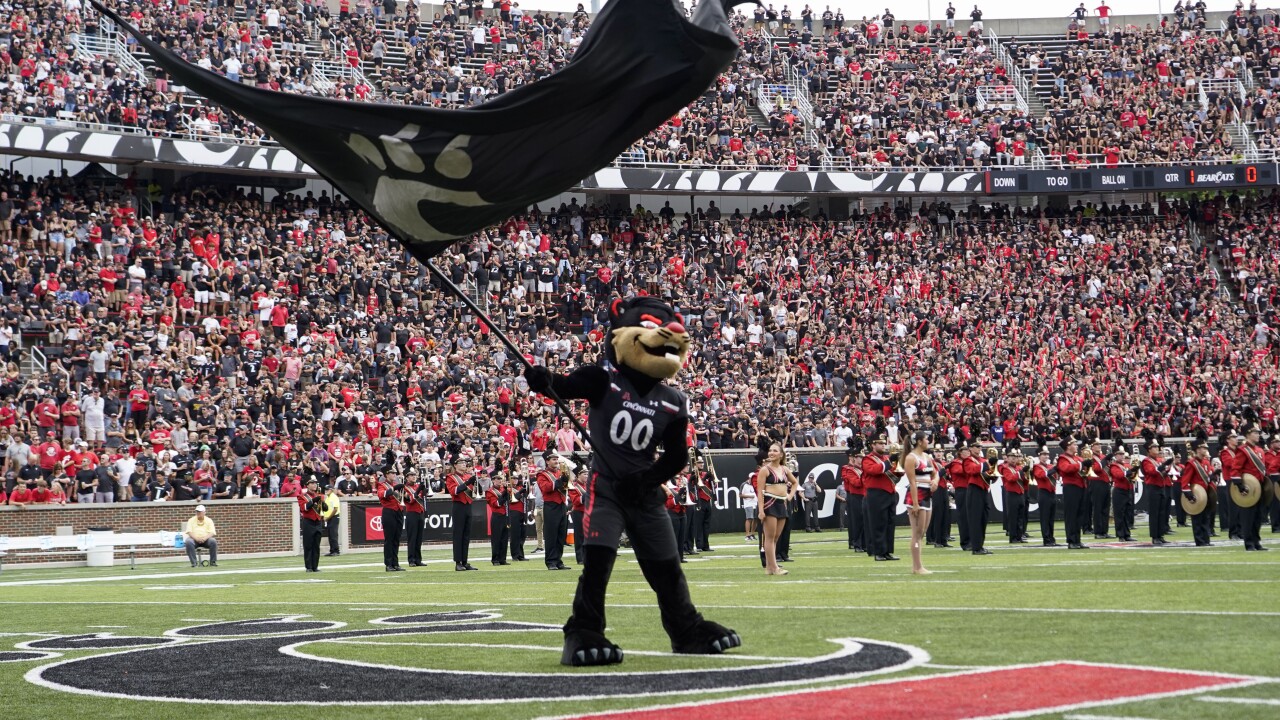
Cincinnati Bearcats Are Validated in Big 12

Live blog: UC Bearcats beat the Indiana Hoosiers 45-24

Cincinnati Bearcats have spent the last 10 years in the abyss, but now, as of July 1, 2023, it's time to party.

Despite a lot of recent success over the past decade, which includes winning 3 football conference championships and participating in 7 bowl games (2 NY6) plus winning 2 MBB tournament championships and appearing in 6 NCAA Tournament, the Bearcats have been in hell.

Over a decade ago, UC went from a "power conference", which was the best basketball conference in America, and a rising, underrated football conference to a geographically-challenged, attendance-challenged, interest-challenged conference called the American Athletic Conference. 

In the Big East, Cincinnati played Syracuse, Louisville, Pittsburgh, West Virginia and in basketball played Villanova, Notre Dame, Marquette, Georgetown. 

These games were great! Stadiums and arenas were often filled up and loud. TV partners were excited about the broadcasts. 

But for the last 10 years, Cincinnati has been stuck playing Tulsa, East Carolina, Tulane, Temple.

Imagine, from a recruiting standpoint and a fan interest perspective, going from playing basketball on a Wednesday night at the Carrier Dome vs the Orange in front of a sell out crowd on ESPN, with guys like Jay Bilas and Sean McDonough on the call. Then, a few years later, playing in Philly vs Temple in front of 500 quiet fans on ESPNU (at best) or (more likely) ESPN+, with D-level announcers.

Cincinnati had a lot of success in both football and men's basketball during their time in the AAC, yet spent most of that time in hell.

Bearcats produced back-to-back undefeated regular seasons in 2020-2021 in football and you know what? It was way more stressful and challenging then it needed to be because fans had to spend the better part of two years defending themselves against slander from the media and other fans who felt the team's success was the result of inferior competition, and not because of their own abilities. 

Let's ignore the fact that going undefeated is extremely difficult, and ignore the fact that the 2021 team produced a total of 11 draft picks over two years (2022 and 2023 Draft), along with countless awards and honors. Those teams were GOOD and deserved praise. Not constant defense. 

Cincinnati basketball won a couple of conference tournament championships, yet their tournament seeding never quite reflected how good the team was. Conference strength of schedule and media disrespect often played a big role in the Bearcats being dismissed as a "good team".

Cincinnati DESERVES this moment.

Men's basketball is one of the all-time winningest programs, with two National Championships (from the 60s). Football has been on an upward trajectory since 2006, with 2 BCS bowls and 2 NY6 bowls, including a College Football Playoff appearance to show for it. That's right, Cincinnati has made the CFP - something schools like Texas, Penn State, Miami have not yet done. 

Every game is against a "real" team and every night, every week the Bearcats will garner attention. They deserve the attention. But it's up to them if they deserve respect. Win a few games against Iowa State, Baylor, Oklahoma State and respect will be there! Respect will be there in a way no one saw while beating Tulsa and East Carolina. 

As for the other 3 teams? Good for Houston, UCF, BYU. I hope they enjoy this moment. 

For UCF, they are the perfect replacement for Texas. Texas has a delusional fan base, and the media consistently portray the Longhorns as a "good" football team, despite them proving otherwise. UCF fans are similarly delusional, and the school portrays themselves as "National Champs", something even Texas hasn't been able to pretend to claim.


Thursday, June 1, 2023

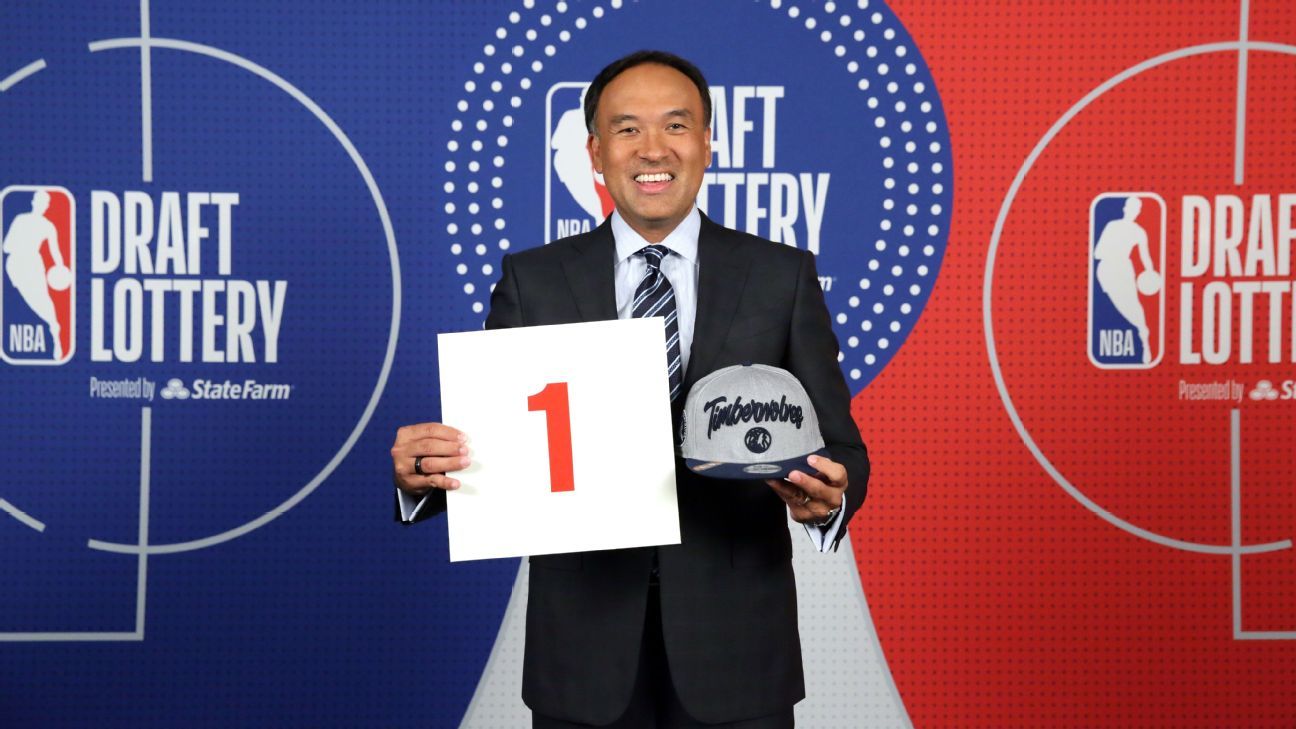
What If: NBA Team With Worst Record Had #1 Draft Pick

 Behind the scenes at the weirdest NBA draft lottery ever

The NBA famously uses a lottery system to determine the draft order of non-playoff teams. It’s a system that has been used since 1984.

But what if they didn’t?

What if the team with the worst record held the #1 pick?

2007

Blazers (5.3%) won the lottery and drafted Greg Oden #1. Grizzlies (22-60) had the worst record and fell to #4 and drafted Mike Conley.

Conley was a big part of the Grizzlies for many years, helping lead them to the playoffs for 7 consecutive seasons from 2011-2017, including a trip to the Western Conference Finals in 2013.

What if Grizzlies had the #1 pick?

What if the Grizzlies drafted Oden #1? Oden didn’t play his rookie season and then played 82 games the next two seasons, before sitting out 3 straight years. His career lasted just 105 games due to injuries. With Mike Conley, the Grizzlies were bad for a couple of seasons. With an injured Oden? Imagine how much worse they’d be.

Is it possible Oden could have been healthier in Memphis than he was in Portland?

The best player in this draft was Kevin Durant, who was drafted #2 by the Seattle Sonics. What if the Grizzlies drafted Durant? 2007-08 Grizzlies finished 22-60, slightly better than Durant’s Sonics. Would they have been that bad with Durant, pairing him with reigning Rookie of the Year Mike Miller, a young Kyle Lowry and Rudy Gay?

Would Durant still have evolved into the league’s best player over time? Seattle (later OKC) added Russell Westbrook (2008) and James Harden (2009) in future drafts. During those same drafts, Grizzlies drafted OJ Mayo (2008) and Hasheem Thabeet (2009). Hard to know if Durant’s development would have been totally derailed being in Memphis.

2008

Bulls (1.7%) won the lottery and drafted Derrick Rose #1. Heat (15-67) had the worst record and picked 2nd, drafting Michael Beasley.

What if Miami Heat had #1 pick?

It doesn’t really matter. Two years later, it all worked out just fine when the Heat signed Lebron James and Chris Bosh, to pair with Dwayne Wade. Four straight Finals appearances and two championships between 2011-2014 renders the results of this draft meaningless.

But what if the Heat did draft Derrick Rose or Russell Westbrook? They had to trade away Michael Beasley for draft picks in order to open cap space for the James/Bosh/Wade trio. Would Miami have traded Rose or Westbrook? Could they have gotten multiple first round picks for either of them? Would their presence derail the “big three” plans? Or could they have found a way to make it work, maybe they could have sacrificed Mike Miller, who was signed to a big contract along with the trio?

2009

Clippers (17.7%) won the lottery and drafted Blake Griffin #1. Kings (17-65) had the worst record and drafted Tyreke Evans #4.

What if the Sacramento Kings had #1 pick?

Evans won Rookie of the Year in 2010, so clearly this worked out, right? Well it did not. Kings would have been fine with Griffin #1. Or James Harden (who went 3). Or Steph Curry (who went 7).

Kings haven’t made the playoffs since 2006 and have a miserable track record of drafting. I feel really confident that if the Kings had the #1 pick and drafted one of Griffin, Harden, or Curry that their playoff drought would have ended somewhere along the way. Especially since they drafted Demarcus Cousins one year later.

Unless, of course, they traded the player for nothing of value, which is entirely possible given their history.

2010

Wizards (10.3%) won the lottery and drafted John Wall #1. Nets (12-70) had worst record and drafted Derrick Favors #3.

What if the NJ Nets had the #1 pick?

To be honest, in either scenario, the Nets come out as winners.

56 games into his rookie season, Nets traded Favors as the centerpiece in a trade to Jazz for Deron Williams. Would they have been better off with John Wall? Hard to know for sure. The one thing that is certain is at the time of the trade, Williams was an established All-Star, something that Wall would not accomplish until 3 years into his career.

Shortly after acquiring Williams, Nets traded for Joe Johnson and later traded 4 years worth of first round picks (which became Jason Tatum and Jaylen Brown) for Kevin Garnett and Paul Pierce. Would they have not made that historic trade if they had Wall? Would they have won more than 1 playoff series during this stretch?

2011

In their first season post-Lebron, Cavs (19.9%) won the lottery and drafted Kyrie Irving #1. Wolves (17-65) had the worst record and drafted Derrick Williams #2.

What if Minnesota Timberwolves had #1 pick?

Since their origination in 1989, Wolves have won just 2 playoff series (2-9 overall), winning both series during the 2004 season. After that, Wolves went 15 years between playoff appearances before finally returning in 2018, and got back again in 2022.

What if the Wolves had drafted Kyrie? Or Kawhi Leonard (#15)? Or Klay Thompson (#11)? Or Kemba Walker (#9)? Or Jimmy Butler (#31)?

If the Wolves did draft any of the aforementioned, what would that have meant for Lebron’s future? Would he have returned to Cleveland in 2014? What would have become of the Spurs dynasty with Kawhi Leonard and would he still have developed into the player he is today outside of their system? If Klay Thompson was drafted #1, there would be no Warriors dynasty during their run of 5 straight Finals appearances.

2012

New Orleans Hornets (13.7%) won the lottery and drafted Anthony Davis #1. Charlotte Bobcats (7-59- lockout-shortened season) had the worst record and drafted Michael Kidd-Gilchrist.

What if Charlotte Bobcats had #1 pick?

Bobcats existed between 2004-2014. During that time, they made the playoffs twice, getting swept both times. They made the playoffs once since rebranding to the Hornets (2016) and overall, haven’t won a playoff series since 2002.

What If Bobcats drafted Anthony Davis? He changed the fortunes of New Orleans and clearly could have changed the fortunes for Charlotte too. At #2, Bobcats drafted Kidd-Gilchrist over take Bradley Beal and Damian Lillard. Any of those three at #1, probably would have meant the Bobcats/Hornets would have won at least one playoff series.

2013

Cavs (15.6%) won the lottery and drafted Anthony Bennett #1. Magic (20-62) had the worst record and drafted Victor Oladipo #2.

What if Orlando Magic had #1 pick?

This wasn’t the best draft to have the #1 pick. Bennett would play just 57 games with the Cavs and his career spanned just 4 seasons and 151 total games.

Magic drafted Oladipo, who, 3 years later, was traded to OKC Thunder along with the rights to Domantas Sabonis for Serge Ibaka.

Otto Porter, Cody Zeller, and Alex Len round out the top 5 so Magic made the right pick at the time. But what if they drafted unknown foreigner Giannis Antetokounmpo? Lately, Magic have had an affinity for raw, lengthy talented players, something Giannis certainly had at the time. Would he have still developed into the player he is today in Orlando?

2014

Cavs (1.7%) won lottery (shocking…) and drafted Andrew Wiggins #1. Bucks (15-67) had worst record and drafted Jabari Parker #2.

What if Milwaukee Bucks had #1 pick?

If Bucks picked first, they may have prevented the Cavs from acquiring Kevin Love, who used the hype and potential of Wiggins to acquire the All-Star big man to pair with Irving and James. What if Cavs were forced to draft Jabari Parker? What if they picked 9th, where they would be slotted if the draft was based on worst record (Noah Vonleh was drafted #9)? Would James still have come home?

In hindsight, this draft included the 2021 NBA MVP (Nikola Jokic #41) and MVP runner-up (Joel Embiid (#3). What if Bucks paired either of those guys with Giannis? More reasonably it would have been Embiid, who was considered at #1 but had a difficult injury history which led to his slide to 3.

2015

Wolves (16-66) had the worst record and won the lottery. They drafted Karl-Anthony Towns.

Other notables include D’angelo Russell (2), Kristaps Porzingis (4), and Devin Booker (13). None of these 3 would have likely changed the fortunes of the Wolves (although they now have Russell AND Towns).

2016

76ers (10-72) had the worst record and won the lottery with 25% odds. They drafted Ben Simmons #1.

This was the right move at the time, but in hindsight it’s fun to look back at Brandon Ingram #2 and Jayson Tatum #3 and wonder how different things might have been for Philly. Especially, considering Simmons didn’t play as a rookie and then didn’t play in 2021-22, eventually getting traded to Brooklyn for James Harden.

2017

Nets had the worst record and Celtics (via previous trade) had the #1 pick, which they traded to the 76ers.

Celtics won the lottery, because they owned the rights to the Nets pick courtesy of 2013 trade involving Garnett and Pierce.

What if the Nets had #1 pick? They could have had Markelle Fultz, Lonzo Ball or Jaylen Brown. But in 2019, they signed Kyrie Irving and Kevin Durant. So would drafting one of these three impacted those free agency plans? Would they have paired the 2 superstars with a young star? Or would they have kept building off their young core that included D’angelo Russell, Caris Levert, Jarrett Allen.

What if Celtics kept the #1 pick? Celtics would trade the #1 pick to the 76ers for #3 and a 2018 first rounder. Celtics might have taken Tatum #1 and we would have status quo. What if they took Fultz? Fultz was a total bust with Philly, playing just 33 games in a year and a half. Would Fultz have had more luck, developed differently?

What if 76ers did something different? So what if Philly and Boston still made the trade, but instead of Fultz the 76ers drafted Ball at PG? Would Ball have been a good fit with Simmons? If not, maybe Philly could have drafted Jayson Tatum. Tatum, Simmons, Embiid as a big three? Now we’re talking!

2018

Suns had the worst record and won the lottery and drafted Deandre Ayton #1.

At one point, this worked out well. Ayton played a big role for the Suns in 2021, as they made the playoffs for the first time in 10 years and even reached the NBA Finals. However, in 2023 he was traded, after a down year in 2022. 

More importantly, Ayton was drafted ahead of Luka Doncic and Trae Young. 

But let’s play this out. What if Suns had drafted Luka Doncic or Trae Young? Would either of them have been a good fit with Devin Booker? Obviously, the Chris Paul trade never would have happened as it did in 2020. Igor Kokoškov was the Suns’ coach for one season in 2018-19. Would Suns have had more immediate success (finished 19-63)? Would they still have ended up with Monty Williams as their head coach? Williams and Paul played a major role in the Suns’ run to the Finals.

2019

Pelicans (6%) won the lottery and drafted Zion Williamson. Knicks (17-65) had the worst record and drafted RJ Barrett 3rd.

What if New York Knicks had #1 pick?

Williamson was considered a generational star, but injuries and weight issues have slowed his career as he missed the whole 2021 season. Williamson has played a grand total of 85 games in three seasons.

Ja Morant was the #2 pick, and helped the Grizzlies finish with the West’s second best record and won their first playoff series since 2015.

RJ Barrett averaged 20 ppg in 2021, so this hasn’t exactly worked out poorly for the Knicks. But still…

How would the Knicks’ fortunes and their national perception have changed if they picked Williamson #1? Would Durant and/or Irving, who signed with Brooklyn, have signed with Knicks in 2019 instead? Would Kawhi Leonard or Kemba Walker have been an option at that time?

Knicks wound up signing Julius Randle and a handful of other guys who played a major role in the Knicks’ resurgence in 2021 as they returned to the playoffs for the first time in 8 years. But let’s be honest, if they signed a superstar in 2019 to pair with Williamson, everything would be different.

2020

Wolves (14%) won the lottery and drafted Anthony Edwards. Warriors (15-50) had the worst record and drafted James Wiseman #2.

What if Golden State Warriors had #1 pick?

It doesn’t matter. Warriors won the 2022 NBA Championship.

But anyways, let’s play this out. James Wiseman has had a disappointing couple years to start his career, while LaMelo Ball and Anthony Edwards both have thrived. At the time of the draft, Warriors were expecting Klay Thompson to play so Edwards or Ball may not have been considered strong fits with Klay and Steph Curry. Wiseman is part of a young core that includes 2021 lottery picks Moses Moody and James Kuminga, to go along with the championship core. In the Golden State culture, Wiseman can certainly still grow into a good NBA player, but the more Ball and Edwards improve, the more this is going to sting as time goes on.

2021

Pistons (14%) won lottery and drafted Cade Cunningham #1. Rockets (17-55) had the worst record and drafted Jalen Green #2.

It’s still way too early to tell how this will play out, but both Cunningham and Green showed a lot of promise as rookies and both teams have added more exciting youngsters via the 2022 draft (Jaden Ivey and Jalen Duren to Detroit and Jabari Smith and Tari Eason to Houston).

2022

Magic (14%) won the lottery and drafted Paolo Banchero #1. Rockets (20-62) had the worst record and drafted Jabari Smith #3.

Back-to-back years the Rockets did not have the #1 pick, but in this case it’s alright. Banchero and Smith, along with Chet Holmgren (#2 pick) were all considered the top tier prospects in this draft and almost all mock drafts and experts had Smith going #1. Rockets pair Smith with Green to form a really exciting duo. Meanwhile, the Magic are now subject to judgement pending the development of Holmgren and Smith, in comparison to Banchero.

Tuesday, April 11, 2023

The Worst Trade in NBA History

 Top 10 NBA Draft Busts – THE TALON

The story of the Vancouver Grizzlies is a story of failure. NBA in Vancouver last 6 years, Grizzlies won 22% of their games and after beginning play in 1995, they were off to Memphis in 2001.

But the story of the Vancouver chapter didn’t end in 2001. It ended two years later, with the completion of the worst trade in NBA history.

In 1997, the Grizzlies traded a future first round pick for Otis Thorpe.

Thorpe, to his credit, averaged 14 ppg and 8.2 rpg over a lengthy career in which he started the majority of the 1,257 games he played over 17 seasons.

But entering his age 35 season, coming off a year where he averaged 10.2 ppg and 7.4 rpg for Detroit, was it really worth it for a terrible Grizzlies team to trade a first round pick?

The good news for the Grizzlies, is the pick came with lottery-protection rules. The bad news for the Grizzlies, is they were so bad for so long, that those lottery protections finally ran out and the worse news is they ran out during a historically epic draft.

Six years after trading a future first round pick for 35 year old Otis Thorpe, it was time to pay the price.

The 2002-03 season was the most successful for the franchise, who finished 28-54 in their second season in Memphis. After years of finishing last and failing to strike gold in the lottery, they finally won some games.

Grizzlies once again landing the #2 pick, despite 7.1% odds to do so. Except, according to the terms of the lottery protection, unless the pick was #1, the Grizzlies would convey the pick to the Pistons.

Therefore, because of Otis Thorpe, the Grizzlies sent the #2 pick to the Detroit Pistons, who were coming off of a 50-32 season in which they lost in the Eastern Conference Finals.

Thorpe only played 47 games for the Grizzlies. He was traded halfway through the 1997-98 season to the Kings for Bobby Hurley and Michael Smith. His final NBA season was 2000-01, which means he was out of the league for two years and was 40 years old, when this pick was finally conveyed.

He was out of the league for two years and played 47 games! That’s what the Grizzlies traded a first round pick for.

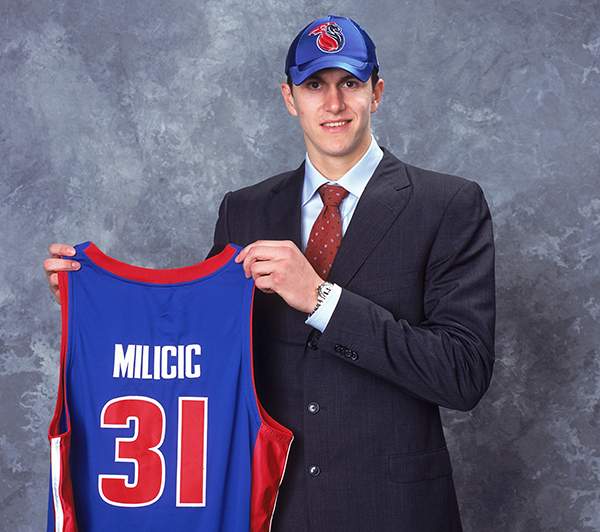
So the 2003 NBA Draft…no big deal right? Well, Lebron James went first to the Cavs. Then, 3-4-5 was Carmelo Anthony, Chris Bosh and Dwayne Wade. 3 legends. 3 Hall of Famers. The Pistons drafted Darko Mililic #2, with the Grizzlies pick. For Detroit, it didn’t matter because they still won the NBA title in 2004.

For the Grizzlies? They missed out on history. They missed out on the chance to draft a legend! Instead, they had Otis Thorpe scoring 10 points a game for 47 games.

Just another said chapter in a series of sad and disappointing events during the NBA’s time in Vancouver.

Tuesday, April 4, 2023

How High School Basketball #1 Recruits Have Fared in NBA

RJ Barrett signs contract extension with Knicks | NBA.com

Playing in the NBA is really tough. It’s even tougher when you have been the best player on your team your whole life.

In this article, I look at all the players that have been the #1 recruit coming out of high school and how they have fared in the NBA. The numbers of success stories is low.

Some key takeaways from this list:

  • 5 #1 recruits since 2002 did not go to college
  • 7 #1 recruits were also drafted #1 
  • Most represented colleges – 2 recruits played for Duke, 2 for Kentucky, 2 for Kansas
  • 2 dunk contest champions (Dwight Howard, Gerald Green)
  • As the 2022-23 season comes to an end, 2 teams have 2 (or more) former #1 recruits
    • Lakers – Anthony Davis, Lebron James
    • Pistons – Cade Cunningham, James Wiseman, Marvin Bagley

Here is the full list of high school #1 recruits.

2024 - Cooper Flagg

2023 - Ron Holland

2022 - Nick Smith

Smith was drafted #27 overall by the Hornets in the 2023 NBA Draft, after one year at Arkansas. 

2021 - Chet Holmgren 

Holmgren was picked #2 overall by the OKC Thunder in the 2022 Draft, but was injured over the summer and missed his entire rookie season. 

2020 – Cade Cunningham

Cunningham played one highly successful season at Oklahoma State and was drafted #1 overall in 2021 Draft by the Detroit Piston, where he averaged 17.4 ppg, 5.6 apg, 5.5 rpg as a rookie. In 2022-23, he played only 12 games due to injury. 

2019 – James Wiseman

7 foot Wiseman played only 3 games at Memphis in 2019, where he averaged 19.7 ppg and 10.7 rpg. He was suspended by the NCAA while they investigated potential recruiting violations.

Despite his lack of college experience, the Golden State Warriors saw enough potential to draft Wiseman #2 overall in the 2020 Draft. As a rookie, Wiseman played 39 games, averaging 11.5 ppg and 5.8 rpg in 21 mpg. 

Wiseman never got a fair shot in Warriors - due to his own performance, injuries, or veterans ahead of him. He was traded to the Pistons this past February. 

2018 – RJ Barrett

Despite all the hype and hoopla that surrounded Barrett’s Duke teammate Zion Williamson, it was Barrett who was the top ranked player coming out of high school. In fact, Williamson was the third best Duke prospect out of high school, ranked 7th behind his teammates Barrett (1) and Hawks guard Cam Reddish (3). 

Barrett was the #3 pick in the 2019 NBA draft to the Knicks, two spots behind his Duke teammate Zion Williamson went #1. He averaged 14.3 ppg as a rookie. He started all 72 games (plus 5 playoff games) in 2021 and saw his scoring numbers increase to 17.6 ppg, including 40% three point shooting (up from 32%) and 44% from the floor (up from 40%).

2017 – Marvin Bagley

After one year at Duke, where he averaged 21 ppg, 11 rpg, Bagley was the #2 pick in the 2018 NBA Draft to the Kings. Bagley was named a consensus First Team All-American and was named ACC Player of the Year

Bagley will forever be known as the guy the Kings drafted ahead of Luka Doncic and Trae Young (and Jaren Jackson Jr).

Bagley has career averages of 14.5 ppg and 7.5 rpg through three seasons with the Kings.

2016 – Josh Jackson 

Jackson left Kansas after one year and was drafted #4 by the Suns in 2017.

#3 pick in 2017 NBA draft to Suns. Jackson’s tenure in Phoenix was highlighted by inconsistency on the court and trouble off of it. After two years with the Suns, he was traded to the Memphis Grizzlies in 2019 and made little impact. He played for the Pistons in 2021, carving out a nice role while playing 25 mpg and averaging 13.4 ppg.

2015 – Ben Simmons 

Ben Simmons dominated his one college season at LSU, averaging 19.2 ppg, 11.8 rpg, and 4.8 apg for a really bad Tigers team that missed the NCAA Tournament.

76ers drafted him #1 in 2016 and he missed his entire rookie season but he made up for lost time averaging 15.9 ppg, 8.1 rpg, 7.7 apg through four seasons. Another notable stat – Simmons is 5-34 in his career on three point field goal attempts.

2014 – Emmanuel Mudiay 

Mudiay skipped college, but did so after the straight from high school and age limit rules were set. After a year in China, he was drafted 7th by the Nuggets in 2015 and has spent time with the Knicks and Jazz in recent years.

2013 – Andrew Wiggins 

Cavs drafted Wiggins #1 in 2014, but he was traded later that summer before ever playing a game in Cleveland. He was traded to Minnesota as part of a package for Kevin Love.

Wiggins spent 5.5 seasons in Minnesota, before being traded to the Warriors (for D’angelo Russell) last February. Wiggins’ whole career has been largely been considered an underwhelming disappointment, relative to expectations when he entered the league and the massive contract (5 years, $147 million) he has. Through 83 games in Golden State, Wiggins has averaged 18.7 ppg on 47% shooting, while starting every game.

2012 – Nerlens Noel 

Noel was on track to be the #1 pick in the 2013 NBA Draft, but suffered a horrific knee injury that cut his Kentucky career short. He ended up falling to #7 to the Pelicans, who traded him to the 76ers as part of the launch of “the process” (they traded Jrue Holiday for Noel).

Noel has career averages of 7.6 ppg, 6.2 rpg, 1.5 bpg, 1.3 spg. He is known as an excellent defender and rebounder, and while he never blossomed into a superstar, Noel is a perfect role player.

2011 – Anthony Davis 

In this era of one-and-done, Anthony Davis has become the most successful player. Davis and Kentucky won the National Championship in his lone college season and he and the Lakers just won the 2020 NBA title. Davis is also a 7x All-Star. The next most successful one-and-done is Carmelo Anthony, who won the championship in college but not the NBA.

Davis was drafted #1 by the Pelicans in 2012 and played 7 years in New Orleans. A lack of success (2 playoff appearances in 7 years) weighed on him and he forced his way out, via trade to the Lakers, where he helped them win the 2020 Championship.

2010 – Harrison Barnes 

Harrison Barnes is the only player on this list to stay in college for more than one season. During both of his seasons at North Carolina, they lost in the Elite 8 of the NCAA Tournament. Barnes averaged 16.0 ppg in two seasons.

In 2012 he was the #7 pick to the Warriors, where he spent 7 seasons and helped them win an NBA Championship in 2015. Barnes was also part of the 73-win tea in 2016, before departing as a free agent for Dallas. In February 2019, he was traded to the Kings and that summer signed $100 million contract extension.

Barnes has career averages of 13.9 ppg, 5.1 rpg.

2009 – Derrick Favors

Favors led Georgia Tech to the NCAA Tournament in 2010 and a first round victory. That’s actually the last time the Yellow Jackets made the tourney.

Favors was the #3 pick in the 2010 NBA draft and played 56 games for the New Jersey Nets, before being dealt to the Utah Jazz as part of a package for Deron Williams.

Favors has had a really solid career and while he has never been the best player on the floor, he has always been consistent and plays a valuable role. In 9 seasons with Utah, Favors averaged 12.1 ppg and 7.4 rpg. After a year with the Pelicans in 2019-20, Favors returned to Utah in 2021.

2008 – Brandon Jennings 

Jennings, like previously mentioned Mudiay, skipped college. This was at the start of the one-and-done era and Jennings had initially committed to Arizona, but instead opted to play professionally in Italy. There, he averaged 7.6 points, 1.6 rebounds, 1.6 assists, and 1.2 steals in 19.6 minutes per game.

Jennings was the 10th pick in the 2009 NBA draft by the Bucks. From 2009-2015, Jennings averaged 16.5 ppg with the Bucks and Pistons.

However, since the start of the 2015-16 season, Jennings scoring dropped significantly to 8.1 ppg in three seasons, with 5 different teams (Pistons, Magic, Knicks, Wizards, Bucks). Jennings has been out of the NBA since the 2017-18 season.

2007 – Eric Gordon 

Gordon was a huge star in his one season at Indiana, after committing to the school as “Mr Basketball” in the state of Indiana in 2006. He played 34 mpg, scoring 20.9 ppg. The Hoosiers, however, lost in the first round of the NCAA Tournament.

In 2008, the Clippers drafted Gordon 7th overall and a few years later traded him to New Orleans as part of a package of assets for Chris Paul. He has been with the Rockets since 2016, and won NBA’s Sixth Man Award in 2017.

2006 – Greg Oden 

Oden’s promising career was doomed from the start. Blazers drafted Oden #1 in 2007, ahead of Kevin Durant. From the second Durant stepped on an NBA court, this pick was criticized as Durant dominated almost immediately. Oden just missed so much time with injuries and unfortunately, his body never allowed him the chance to play in the NBA

2005 – Gerald Green 

Green is one of the final “straight from high school” prospects and the first (of three) on this list. While guys like Jennings and Mudiay were forced to go overseas (NBA rule is one year removed from high school), Green went straight from high school graduation to being the 18th pick in the 2005 Draft (to the Celtics).

He has had a roller coaster career, playing for 8 different teams (Celtics, Suns, Rockets, Heat, Pacers, Mavs, Nets, Wolves). He was cut by the Rockets before last season and never found his way onto another roster.

2004 – Dwight Howard

It sure has been a weird career for Dwight Howard. He spent the first 8 seasons of his career in Orlando and averaged 18 ppg and 13 rpg, while being considered the top center in the game. He helped lead the Magic reach the NBA Finals in 2009, which is Hall of Fame worthy on it’s own.

In the 9 seasons after forcing his way out of Orlando, he has played for 7 different teams – Lakers (2 years – 2 different stints), Rockets (3 years), Hawks (1), Hornets (1), Wizards (9 games), 76ers (1 year).

2003 – Lebron James

James is one of the very few athletes in all of sports who not only matched the ridiculous amount of hype surrounding him, but has clearly surpassed him. He has been to 10 NBA Finals (4-6) and is one of the all-time greatest players in NBA history.

Wednesday, January 4, 2023

Inside Lebron James NBA Finals Record

 NBA Finals: LeBron James Matters | Sports News,The Indian Express

Lebron James is not now, nor will he ever be the NBA’s all-time “GOAT”. But in his own way, James is without question one of the best all-time. Whether it’s his on court performance, value to his teams, or what he has done outside of basketball, James truly is incredible.

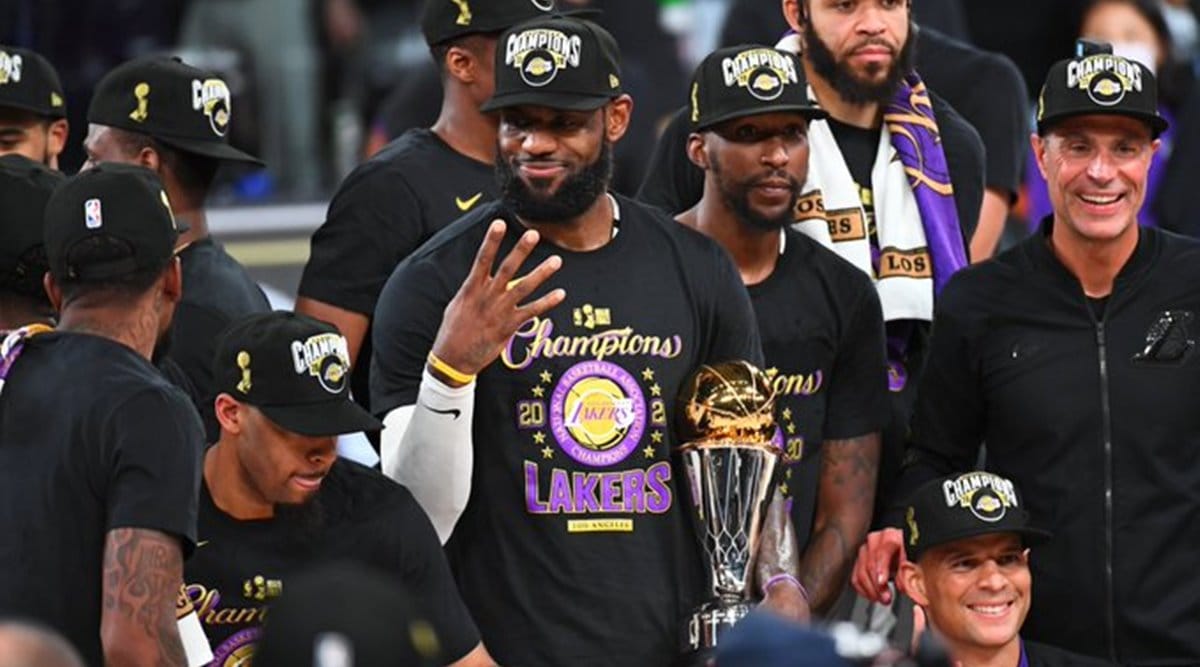
In 2020, Lebron was crowned NBA champion for the 4th time in his career, as he helped lead the Lakers to the franchise’s 17th championship and first since 2010.

The Lebron greatness conversation always includes his Finals record (3-6). But to me, the most important number is 10. Lebron has played in the NBA Finals in 10 out of 18 seasons.

While 6 losses is nothing to brag about, it’s important to view them in the proper context.

2007 – Worst team ever

Cavs got swept by Tim Duncan and the Spurs. Drew Gooden (12.8 ppg) was the Cavs second leading scorer in the Finals. The lineup included James, Gooden, Sasha Pavlovic, Zydrunas Ilgauskas, and Daniel Gibson.

This might legitimately be the worst NBA Finals team of all-time. But to get there, Lebron single-handily beat a legendary Pistons team in the Eastern Conference Finals.

2011 – No excuse

In James’ first year in Miami, the Heat lost to the Mavs. As great and well put-together as that Dallas team was, there is no excuse for this loss. Miami had the better team and this is the one Finals loss that stands out as inexcusable.

2014 – Great Spurs

This Spurs team was great, going 62-20. The 62 wins were the most during any of their 5 championship seasons. They beat the Heat in just 5 games. Kawhi Leonard got his first ring and Tim Duncan, Tony Parker, and Manu Ginobili got their last ones.

2015 – No Kyrie Irving or Kevin Love

Do you need proof of Lebron’s greatness? Here it is.

Warriors won this series in 6 games, even though Kyrie Irving and Kevin Love were both out due to injuries. Lebron was stuck with Timofey Mozgov, the team’s second leading scorer (14.0 ppg), Tristan Thompson, Iman Shumpert, and Matthew Dellavedova, who was arguably the team’s second best player throughout the Finals.

2017 and 2018 – Warriors Super Team

2017 was the Warriors first year with Kevin Durant and coming off the blown 3-1 lead, no one ever had a chance of beating them. 

In 2018, Cavs traded Kyrie Irving before the season for a damaged Isaiah Thomas and returned to the Finals with a new group that included George Hill, Jordan Clarkson, Larry Nance Jr, and Rodney Hood, plus Love and Smith.


I’m not making excuses for James, but he is not the best player ever – Michael Jordan is and forever will be. But there’s a huge difference between Jordan and James. Jordan went 6-0 in the Finals against 6 teams inferior to his. James lost 6 Finals, 5 of which to teams superior to his.

On the other end of the spectrum, his four championships have all come under extraordinary circumstances.

2012 – lockout-shortened season

2012 was Lebron’s first championship, in his second season in Miami. Following the Heat’s 2011 loss to the Mavericks, the NBA experienced a lockout between players and owners. As a result, the season was delayed and didn’t start until Christmas Day and teams only played 50 regular season games.

But give the Heat credit for beating a Thunder team that had Kevin Durant, Russell Westbrook, James Harden, and Serge Ibaka.

2013 – Ray Allen bailout

Again, give the Heat credit for beating an amazing Spurs team. Miami trailed the series 3-2 as they returned home for Game 6. Ray Allen, along with Chris Bosh, bailed out the Heat and literally saved the season.

After that, the Heat would go on to win Game 7, securing back-to-back championships.

2016 – 3-1 comeback

There is a lot to unpack here. The 2016 Warriors went an NBA-record 73-9 and led the Cavs 3-1 through 4 games of the series. In game 4, Draymond Green’s actions earned him a one-game suspension. Cavs won game 5, to give them some life in the series. They would win games 6 and 7 and complete the historic comeback. It was the Cavs’ first ever NBA title and the city of Cleveland’s first championship since the 1964 Browns’ NFL Championship (pre-NFL/AFL merger).

2020 – The Bubble

You know the story – NBA season was paused in March due to worldwide spread of coronavirus. The season resumed in July, inside a “bubble” environment. This meant no fans, no families. Just 100% basketball, all the time. Lakers ended their 7 year playoff drought and won their first playoff series since 2012. Lebron and Anthony Davis carried the Lakers past Blazers, Rockets, Nuggets, and Heat to win his 4th title.